
Life Science Buffers
Balanced salt solutions and powders used for molecular, protein, nucleic acid, and cell biology applications including cell culture, electrophoresis, ELISA, and chromatography processes; available in a variety of formulations and grades.
Buffer solutions serve to keep pH (acidity or alkalinity) nearly constant in a variety of chemical and biological applications. For example, a bicarbonate buffer helps maintain the pH of blood, a buffered saline maintains cellular contents at a consistent pH level, and buffers help maintain a narrow pH range for enzymes to function correctly.
Most biological samples used in research are kept at a pH of about 7.4. Common biological buffers used for tissue culture include Dulbeccos phosphate buffered saline (PBS), Tris base, HEPES, MOPS, PIPES, and other formulations developed for specific cell lines or applications. Most buffers used in cell culture are also DNase-, RNase-, and protease-free.
The choice of buffer for a particular biological reaction or site depends on several factors:
- Temperature
- Desired or target pH
- Buffer toxicity (to the system)
- Buffer interactions with other system components


Bioworld TAE Buffer (25X), 1 L
Product DescriptionTAE (Tris-Acetate-EDTA) buffer liquid concentrate has a 25X concentration and has a pH of 8.3 ± 0.1. A concentration of 1X contains 0.04M Tris acetate and 0.001M EDTA. TAE is used for electrophoresis of nucleic acids in agarose and polyacrylamide gels. It can be used for both genomic and large supercoiled DNA, and can also be used as both a running buffer and a gel preparation buffer. It is recommended for resolution of RNA and DNA fragments larger than 1500 bp, for genomic DNA and for large supercoiled DNA. TAE buffer has a relatively low buffering capacity and therefore replacement of the buffer during prolonged electrophoresis is recommended.


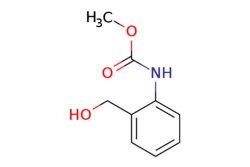
eMolecules 117550-36-4 | Methyl (2-(Hydroxymethyl)Phenyl)Carbamate | MFCD14680132 | 250mg
AstaTech | TERT-BUTYL 4-(CYANOMETHYL)PHENYLCARBAMATE | 1g | 449717503 | 21119 | 95.000 | 1233249-35-8 | MFCD17465121 | 232.283 | C13H16N2O2
If you are unable to find the chemical you are looking for, make sure you are logged into your fishersci.com account and click on the following link:
eMolecules Building Block Tool

Kd Medical Inc TRIS BUFF HCL PH8.0 1L
Used for molecular biology, protein chemistry, and biochemical applications. 1 Molar solution, pH 8.0. One 1 liter bottle.
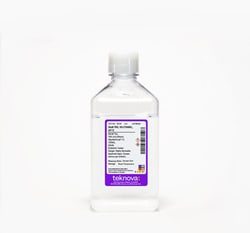
Teknova 50mM Tris, 16% Ethanol, pH 7.5. 1000mL. Endotoxin Tested, Sterile.
50mM Tris,16% (v/v) Ethanol


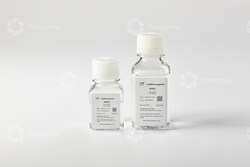
LAB BIOREAGENTS NGB I Buffer 250ml
Lab Bioreagents NGB (I, II, III) are newly developed next generation assay buffers that provides exceptional performance and broad compatibility for Western blot, ELISA, IHC and nucleic acid detection assays. The NGBs are basic buffers that hat requires neutralization by acid in the reaction. Among the tests, NGBs have been demonstrated to maintain the full bioactivity of proteins and antibodies.
Sigma Aldrich Fine Chemicals Biosciences TRIS 3 HYDROXYPROPYLTRIAZOLY1G
Tris(3-hydroxypropyltriazolylmethyl)amine, 1g

Rockland Immunochemicals 10X SDS-PAGE Running Gel Buffer (0.25 M Tris, 1.92 M Glycine, 1.0% SDS pH 8.3) - MB-017
SDS-PAGE, sodium dodecyl sulfate polyacrylamide gel electrophoresis, describes a technique widely used in biochemistry to separate proteins according to their electrophoretic mobility (a function of the length of a polypeptide chain and its charge) and no other physical feature. SDS is an anionic detergent applied to protein sample to linearize proteins and to impart a negative charge to linearized proteins. 10X SDS-PAGE Running Buffer is suitable for laboratory involved in protein biochemistry. Visit our newly expanded web site at www.rockland-inc.com for methods using this and other buffers.
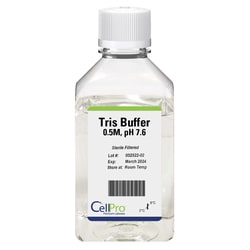
Alkali Scientific CellPro™ Tris Buffer, 0.5M, 10X, pH 7.6, 1L
Alkali Scientific™ CellPro™ Tris solution offers sterile and filtered Tris buffer for various laboratory applications. This high-quality solution is meticulously prepared to ensure purity and consistency, meeting the stringent requirements of scientific research and experimentation. With its sterile formulation, it minimizes the risk of contamination, making it suitable for a wide range of cell culture and molecular biology procedures. The filtered nature of the solution ensures clarity and reliability in experimental results, providing researchers with confidence in their findings. Whether used in protein biochemistry, DNA electrophoresis, or other molecular biology techniques, CellPro™ Tris solution delivers reliable performance and consistent results, contributing to the success of laboratory workflows.
![Research Products International Corp Tris Base Ultra Pure [Tris (Hydroxymethyl) Aminomethane], 10 Kilograms](https://assets.fishersci.com/TFS-Assets/CCG/product-images/VN00006095-T60040-10000.0.JPG-250.jpg)
Research Products International Corp Tris Base Ultra Pure [Tris (Hydroxymethyl) Aminomethane], 10 Kilograms

Tris Base Ultra Pure is a commonly used reagent and buffer component. Tris Base, Tris(hydroxymethyl)aminomethane, is a primary amine that acts as a buffering agent to maintain a stable pH in experimental procedures.
It is particularly effective in the pH range of 7.2 to 9.0, making it suitable for applications requiring slightly alkaline to mildly acidic pH conditions. Tris Base Ultra Pure is highly purified to remove impurities and contaminants, ensuring the highest quality for laboratory use.
The ultra-pure form is essential for applications where the presence of impurities can negatively impact experimental results. Tris Base Ultra Pure is commonly used in various molecular biology techniques such as DNA and RNA extraction, protein purification, and enzymatic assays.
It is also utilized in the preparation of electrophoresis buffers and PCR reactions.

Bioworld TAE Buffer (10X), 4 L
Product DescriptionTAE (Tris-Acetate-EDTA) buffer liquid concentrate has a 10X concentration and is prepared with 18 megohm water. It has a pH of 8.3 ± 0.2. A concentration of 1X contains 0.4M Tris acetate and 0.01M EDTA. TAE is used for electrophoresis of nucleic acids in agarose and polyacrylamide gels. It can be used for both genomic and large supercoiled DNA, and can also be used as both a running buffer and a gel preparation buffer. It is recommended for resolution of RNA and DNA fragments larger than 1500 bp, for genomic DNA and for large supercoiled DNA. TAE buffer has a relatively low buffering capacity and therefore replacement of the buffer during prolonged electrophoresis is recommended.
![eMolecules 1446012-48-1 | TERT-BUTYL 6-(HYDROXYMETHYL)-5-OXA-2-AZASPIRO[3.4]OCTANE-2-CARBOXYLATE | MFCD27986992 | 1g](https://assets.fishersci.com/TFS-Assets/CCG/product-images/502181707.JPG-250.jpg)
eMolecules 1446012-48-1 | TERT-BUTYL 6-(HYDROXYMETHYL)-5-OXA-2-AZASPIRO[3.4]OCTANE-2-CARBOXYLATE | MFCD27986992 | 1g
Medchem Express | Deschloroclozapine | 10mg | 446270896 | HY-42110 | 1977-07-7 | MFCD01730958 | 292.386 | C18H20N4
If you are unable to find the chemical you are looking for, make sure you are logged into your fishersci.com account and click on the following link:
eMolecules Building Block Tool